
















in industrial filtration
Home > Filtration techniques > Flow rate
Flow rate in industrial filtration
Flow rate is a characteristic that, to a technician, may seem like a simple concept, and yet… the devil is always in the detail. To avoid overcomplicating matters and, above all, to put the technical aspects into perspective, we will focus on the issue of flow rate in relation to industrial liquid filtration.
Flow rate in industrial filtration is the measurement of the quantity or volume of liquid that flows through a system in a given time. In this brief technical overview, we’ll take a practical look at units of flow rate, as well as its relationship with viscosity and the filtration rating, expressed in microns. We’ll conclude by explaining the different filter options available depending on flow rates and how to separate your liquids from your solids.
The impact of flow rate on the economic aspects of industrial filtration
In solid–liquid separation, as in many other fields, there is a wide variety of units and combinations. But some are used more frequently than others … in France we use litres per minute and cubic metres per hour… which translate internationnaly to GPM (gallons per minute), CFM (cubic feet per minute), CFH (cubic feet per hour)…
Having a flow rate is all well and good, but it’s best to have the right flow rate. And, of course, the larger the units, the higher the flow rate and the greater the need for precision. This may seem obvious, and yet… A bicycle, a car or a rocket are, at the end of the day, simply a means of transport. After all, whether you want to travel at 15 km/h, 150 km/h or 1,500 km/h, what’s the difference? Just one more or one fewer zero. The analogy is a bit extreme, yet between 1,500 l/min and 150 m³/h, it’s clear that the technical choice of filter is not the same, nor is the price.
So, a rough estimate of flow rate is fine, and so are flow rate ranges. But if the estimate becomes too broad, we can quickly run into inconsistencies in price or technology. Flow rate therefore has an impact on the economic aspect of industrial filtration.
It is important to check your data and pay close attention to orders of magnitude.
It is clear that, when it comes to filters, flow rate alone is not enough. For your application, you need to take into account two other important factors that will affect your filtration process. These are: viscosity and the filtration rating.
Do you have a filtration inquiry ?
Flow rate and viscosity in industrial filtration
When it comes to water or low-viscosity fluids, most technicians have no difficulty being precise. However, as viscosity increases – particularly above 2,000 cP – flow rates are often only approximate. The difficulty in measuring them is obvious.
If you want to measure your flow rate, you can look at the simple storage containers used in your production process. That is to say, bins, tanks and bottles. Then get out the stopwatches on your mobile phones – or better still, on your Swiss watches (let’s at least make use of that feature once) – and work out how many containers are filled within a given time frame. Dust off our grandfathers’ rule of three – the ‘equation with one unknown’ for the younger generation – and if you’re a bit of a techie, ask Google to calculate the throughput.
Flow rate and micron rating
The micron rating very often determines the permeability of a filter media. In other words, the lower the filtration rating, the lower the permeability. Of course, there are a few exceptions that do not prove the rule… We can talk about ultra-high-efficiency filter media or filter screens, but generally speaking, the laws of physics have not changed much over the last 25,000 years, and there is no such thing as a miracle product. At least not to our knowledge.
The aim of this short paragraph is to draw your attention to the fact that saying ‘I want to filter 1,500 CFH at 5 microns’ is rather simplistic. Is it possible to filter the flow of the Danube to 5 microns? With a billion or two and probably a filter area equivalent to a state, yes (it’s almost a dream for us…). And you can double the prices if you talk about absolute filtration ratings. This bit of humour is simply to warn you that it is essential to properly match the flow rate and micron rating to your requirements.
Flow rate and choosing your industrial filter
Flow rate is an important factor in choosing a filter, but above all it is the primary consideration when selecting the right technology. Most technicians grasp this concept quite easily. Among other things, the flow rate determines the choice of pipework, pump, tanks and storage components, etc. However, to choose the right solid-liquid separation system, it is important not to limit yourself to these basic parameters.
To cater for a wide range of flow rate requirements, we have developed a range of automatic filters. Of course, every manufacturer has developed a ‘universal’ filter capable of remarkable performance, but at K2TEC we have created a range of three units, each designed to meet different requirements in terms of flow rate, viscosity and filtration rating.
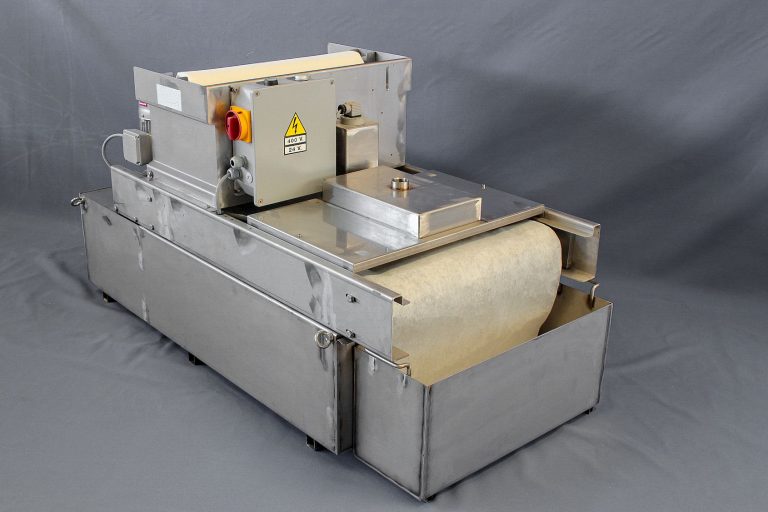
The PNT gravity filter uses rolls of non woven media. It is capable of handling high flow rates automatically, using gravity alone. Up to: 850 l/min or 51 m³/h per filter, with very low viscosities. It is virtually unaffected by variations in flow rate, load and viscosity.
Operating purely by gravity, this filter requires a large filtration surface area and can be bulky for the highest flow rates (up to 1.50 m wide by 5.50 m long).
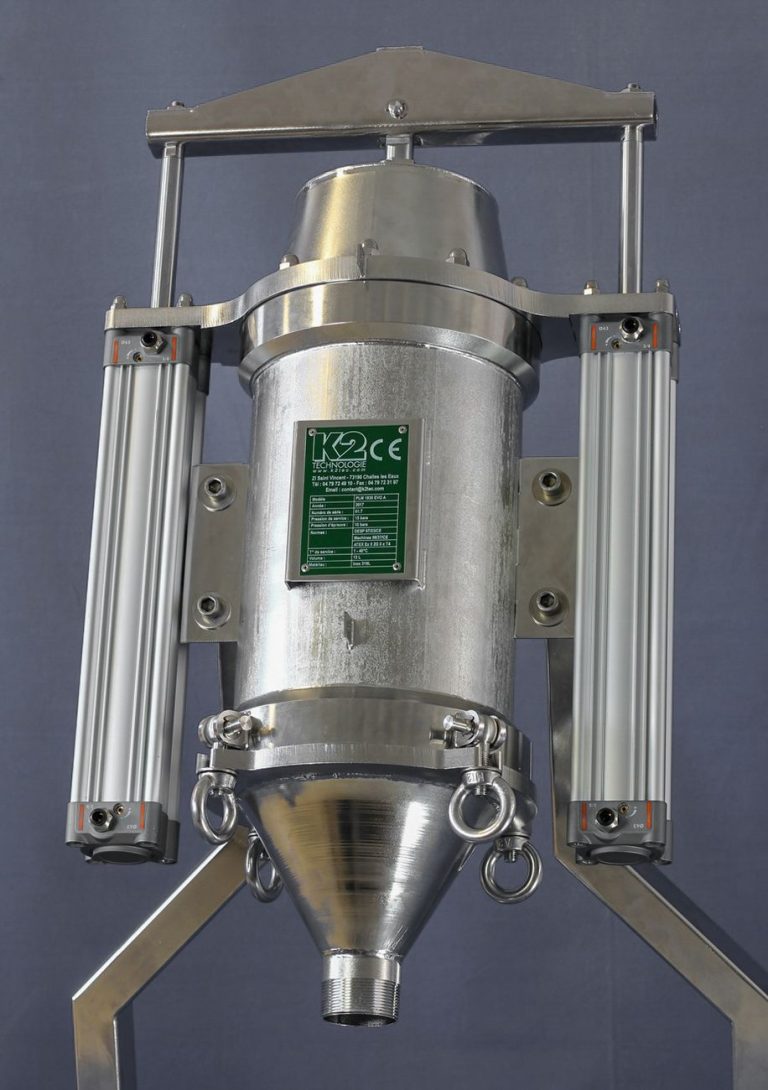
The PLM self-cleaning filter is the ‘champion’ of filters for very high-viscosity products.
With this automatic filter, we talk about flow rate, but we talk even more often about viscosity. As viscosity has a significant impact on the permissible flow rate for a filter housing, the PLM filter is best suited to medium flow rates. However, it has no problem handling very high viscosities, up to 150,000 cP.
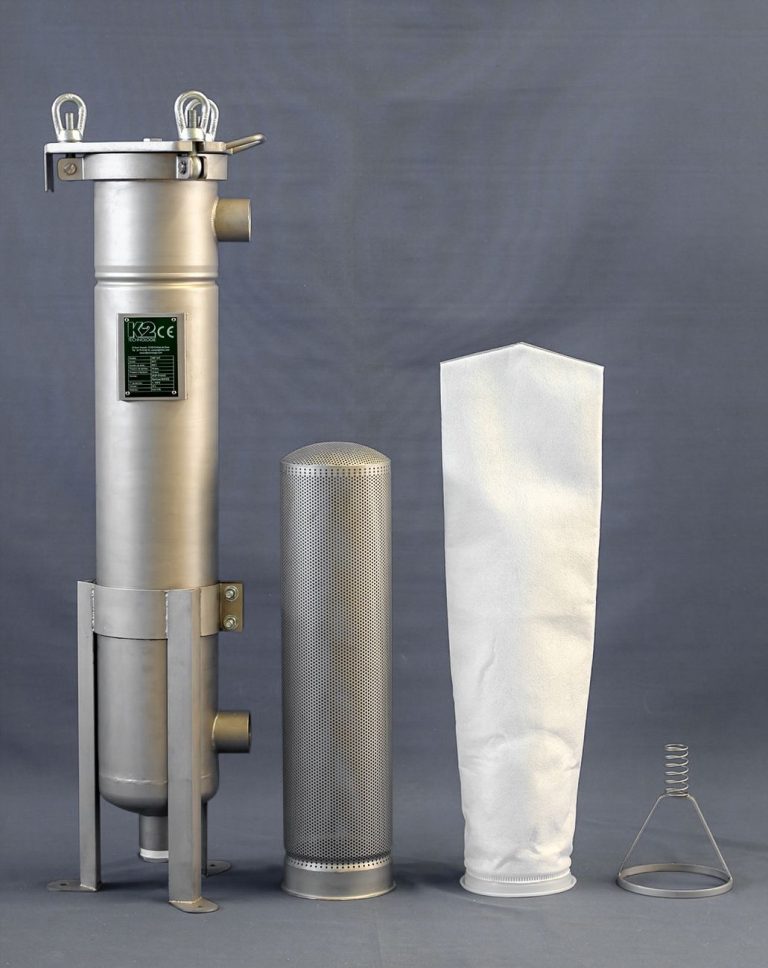
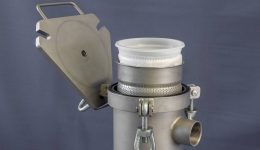
The KBF bag filter is the simplest of industrial filters. Whilst this filter can operate by gravity, it is generally used under pressure. It is undoubtedly the ‘no-limits’ filter in the range, as it is available in four sizes and can be configured as a multiplex unit, enabling it to handle flow rates from 1 l/min to 300 m³/h.
It is highly versatile and can handle viscosities of up to 5,000 cP in sectors such as food and drink, cosmetics, chemicals and the automotive industry…